
“The Dutch Claude Lorrain”
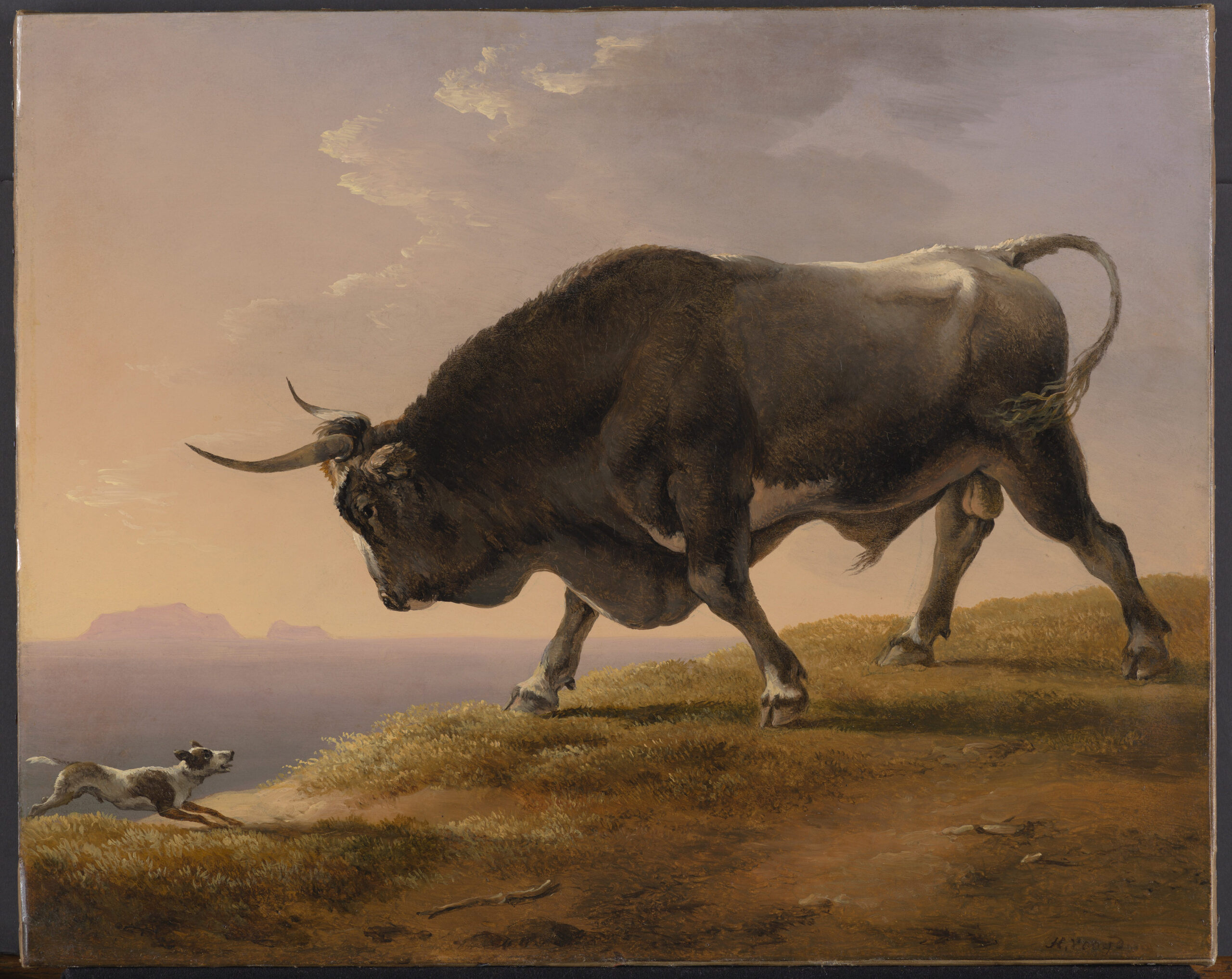
Hendrik Voogd was a Dutch landscape painter and printmaker, born in Amsterdam in 1768. He is best known for his Italianate landscapes, which earned him the nickname “the Dutch Claude Lorrain” due to his stylistic resemblance to the renowned French painter.
Early Life and Training
Voogd began his artistic training at the Amsterdam Stadstekenacademie (City Drawing Academy). In 1788, he traveled to Rome on a study grant, and like many Northern European artists of the time, he was captivated by the light, ruins, and classical landscapes of Italy. He would remain in Rome for most of his life, becoming part of the circle of Dutch and German artists known as the Bentvueghels.
Artistic Style and Themes
Voogd specialized in Arcadian landscapes idealized depictions of nature filled with classical ruins, shepherds, and grazing animals. His work is characterized by:
He also made etchings and drawings, which contributed to his popularity among art collectors and connoisseurs of classical landscape.
Later Life and Legacy
Despite living in Italy, Voogd maintained connections with the Netherlands. In 1802, he was elected a member of the Royal Institute of the Netherlands, the forerunner of the Royal Netherlands Academy of Arts and Sciences. He died in Rome in 1839, having spent over 50 years in Italy.
Today, he is recognized as one of the leading Dutch landscape painters of his generation and a key figure in the Neoclassical revival of landscape art.
Share this: