
Painter of Elegance, Order, and Everyday Life
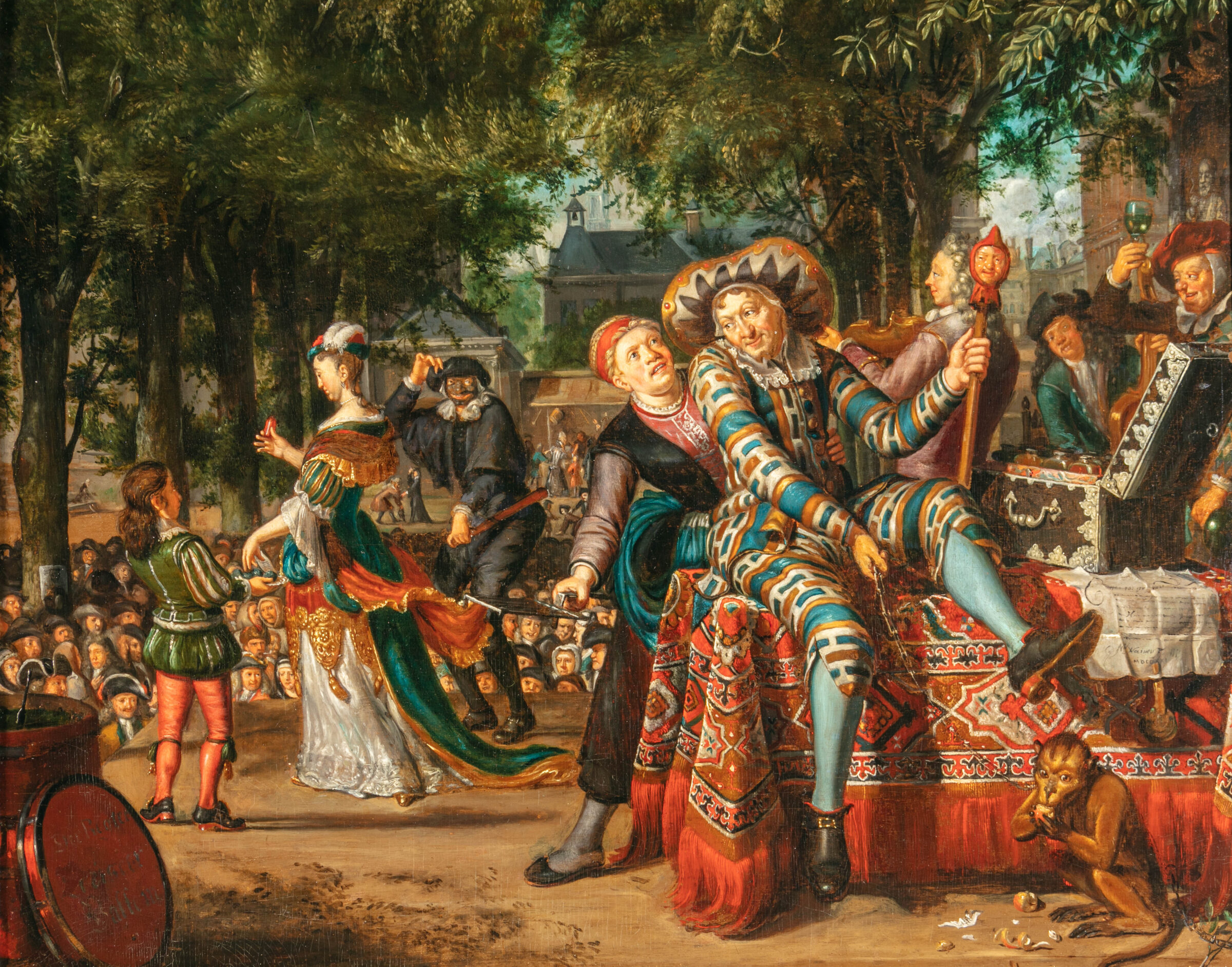
Matthijs Naiveu was a Dutch painter of the late Golden Age, known for his refined genre scenes, interiors, and portraits. Born in Leiden in 1647, Naiveu was part of the generation that followed the great masters of the Dutch 17th century, and he carried forward their traditions with technical precision, narrative charm, and a careful attention to domestic detail.
Naiveu first trained as a painter under Abraham Toorenvliet, a respected artist and glass painter in Leiden. He later studied with Gerard Dou, one of Rembrandt’s most successful pupils and the leading figure of the so-called Leiden fijnschilders (“fine painters”)—a group known for their small-scale, highly detailed works. This meticulous style deeply influenced Naiveu’s artistic development and remained a hallmark of his work throughout his career.
His paintings typically depict elegant domestic interiors, schoolrooms, gardens, and leisurely bourgeois life. In these compositions, figures are often engaged in subtle action: reading, sewing, instructing children, or enjoying a quiet moment. These scenes, though seemingly ordinary, are rich in meaning, reflecting moral lessons, social ideals, or vanitas themes (reminders of life’s transience). Like many Dutch genre painters, Naiveu embedded symbolic elements within everyday settings—objects like musical instruments, books, mirrors, or extinguished candles subtly guiding the viewer toward deeper interpretations.
Naiveu’s technical style is characterized by precise brushwork, polished surfaces, and soft, controlled lighting that enhances the sense of calm and clarity. His color palette often includes muted tones—warm earths, soft grays, and gentle blues—which contribute to the tranquil and balanced atmosphere of his interiors. His skill in rendering texture, fabric, and material surfaces also draws comparisons to artists like Gabriel Metsu and Pieter de Hooch.
In addition to genre painting, Naiveu also painted portraits and worked as a decorative artist, producing designs for theater scenery and festive decorations. In 1678, he moved to Amsterdam, where he was appointed manager of the city’s theater decorations, a position that likely expanded his knowledge of theatrical composition and spatial design.
Though Matthijs Naiveu never achieved the fame of Rembrandt or Vermeer, his paintings were appreciated in his own time for their craftsmanship and gentle storytelling. His works were collected by educated patrons who valued the elegance and moral refinement of Dutch domestic life. Today, his paintings are preserved in museums such as the Rijksmuseum, Museum De Lakenhal (Leiden), and other European collections.
Matthijs Naiveu died in Amsterdam in 1726, leaving behind a body of work that offers a window into the cultivated and orderly world of the Dutch bourgeoisie at the close of the Golden Age. His paintings continue to charm viewers with their subtle beauty, quiet dignity, and insightful portrayal of everyday life.
Share this: