
Master of Architectural Fantasy and Classical Landscape
Hendrick van Cleve III was a prominent Flemish painter, draughtsman, and engraver of the 16th century, known for his intricate depictions of landscapes and imaginary architecture. Born into the well-known Van Cleve artistic family in Antwerp around 1525, he was part of a vibrant cultural scene that merged Northern European precision with Renaissance ideals drawn from Italy and antiquity.
Van Cleve received his training in Antwerp, most likely under the Mannerist master Frans Floris, whose influence is evident in van Cleve’s approach to classical themes and figure composition. While he painted religious and mythological subjects, van Cleve is especially admired for his capriccio-style landscapes idealized scenes filled with ancient ruins, temples, porticoes, and bustling human activity. These works combined detailed architectural elements with lush natural backdrops, creating visually complex, fantastical environments that reflected the Renaissance fascination with the classical past.
Unlike many of his contemporaries, van Cleve didn’t travel extensively to Italy. Yet his works show a deep knowledge of Italian architecture and Roman antiquity, likely drawn from prints, books, and conversations with artists who had journeyed south. This blending of imagination and classical knowledge is a hallmark of his work: cities never seen but deeply evocative of ancient grandeur.
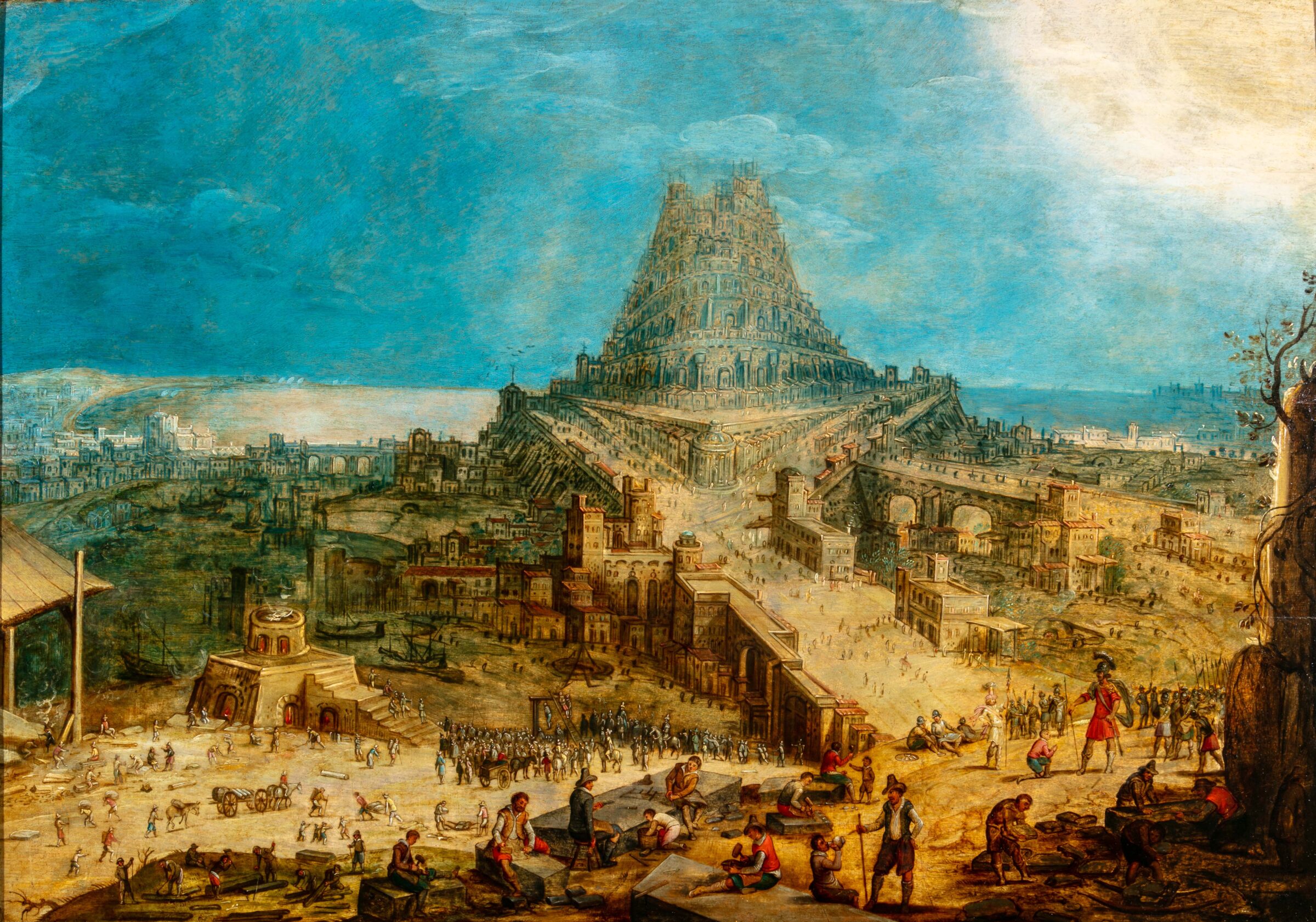
Van Cleve often set biblical or mythological stories within these vast, imagined architectural frameworks. Episodes like the Journey to Emmaus, the Tower of Babel, or scenes from Roman history unfold amid elaborate colonnades and sprawling courtyards, turning familiar narratives into epic, almost theatrical performances. His figures though sometimes secondary to the structures are carefully staged and animated, contributing to a sense of narrative rhythm across the canvas.
In addition to painting, van Cleve was a prolific designer of prints, working with major Antwerp publishers like Hieronymus Cock. His engravings extended his influence far beyond the Low Countries, shaping how artists and patrons across Europe imagined both the past and the sacred. These prints often served educational, devotional, or decorative purposes and remain an important part of his legacy.
Though not as widely recognized today as his better-known contemporaries, Hendrick van Cleve III was deeply respected in his time. His works catered to an elite audience that appreciated the fusion of art, history, architecture, and imagination a uniquely Renaissance combination. He is sometimes confused with other members of the Van Cleve family (including Joos van Cleve), but his focus on grand architectural settings and sweeping landscapes sets him apart within the Flemish tradition.
Van Cleve’s death is thought to have occurred sometime after 1589, with the exact date unknown. Today, his paintings and prints can be found in major collections across Europe, including the Rijksmuseum, the British Museum, and the Kunsthistorisches Museum. They continue to captivate viewers with their dreamlike blend of classical fantasy, architectural precision, and Renaissance curiosity.
Share this: