

A Student of Rembrandt and a Master in His Own Right
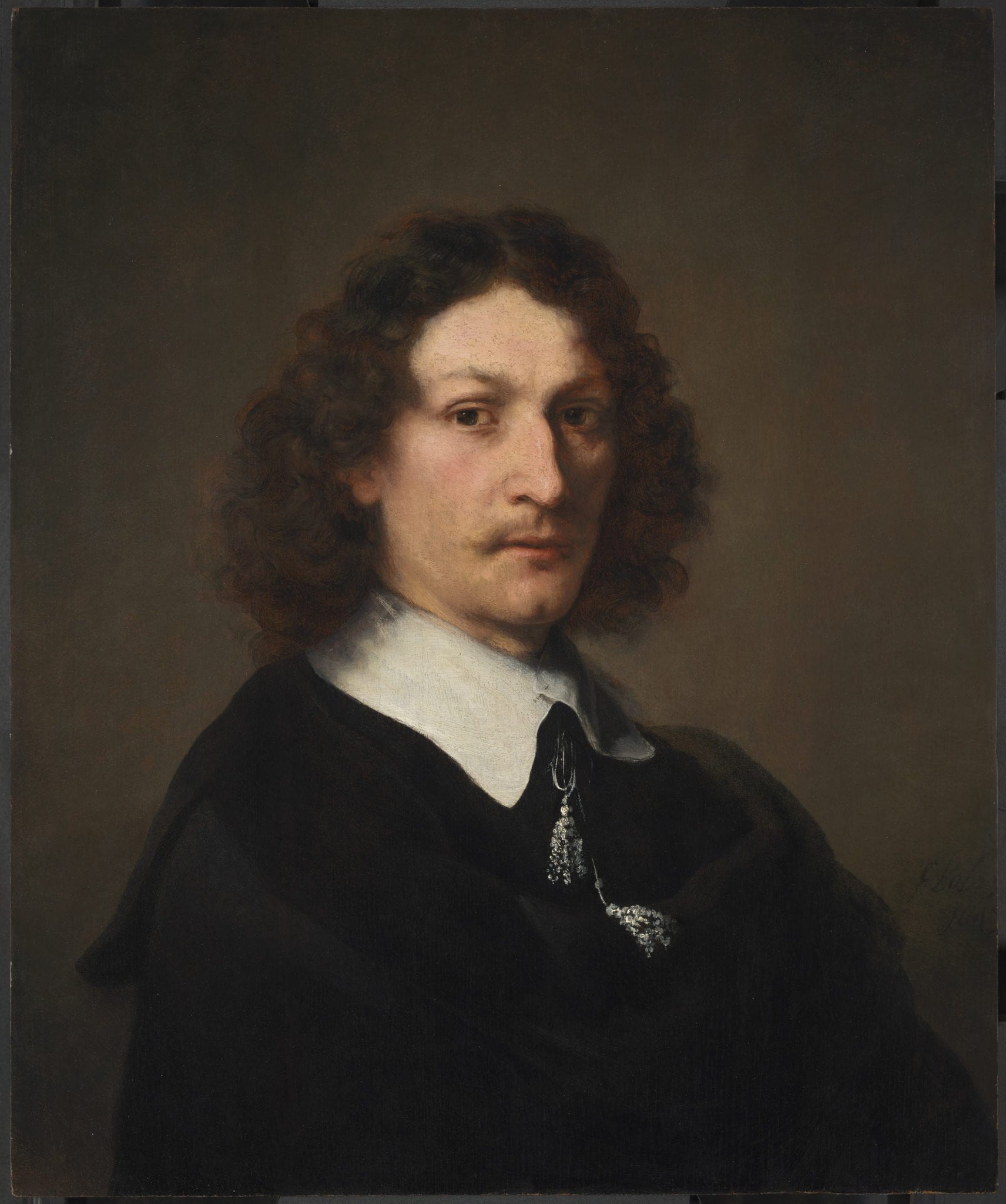
Ferdinand Bol was a prominent Dutch painter, draughtsman, and etcher of the Dutch Golden Age, born in Dordrecht in 1616. He is best known for his portraits, biblical scenes, and historical paintings, and was one of the most successful pupils of Rembrandt van Rijn.
Training and Influence
Bol studied painting in Dordrecht before moving to Amsterdam, where he became a pupil in Rembrandt’s workshop around 1636–1637. Under Rembrandt’s guidance, Bol adopted his teacher’s dramatic use of light and shadow (chiaroscuro), as well as his interest in historical and biblical themes.
Though his early works are very close in style to Rembrandt’s, Bol eventually developed a lighter, more elegant style that appealed to Amsterdam’s wealthy elite.
Career and Success
Bol established himself as an independent master by the early 1640s. He quickly gained fame for his refined portraits of merchants, scholars, and city officials. His sitters are often depicted in luxurious settings, wearing rich clothing and surrounded by classical architecture or symbols of their profession.
He also painted large-scale allegorical and mythological works, including commissions for public buildings such as Amsterdam’s City Hall (now the Royal Palace on Dam Square).
In 1653, he married a wealthy widow, which allowed him to retire from painting around 1669, although he remained active in civic life.
Legacy
Ferdinand Bol died in Amsterdam in 1680. Though overshadowed by his teacher Rembrandt in modern times, Bol was one of the most respected painters of his era. His works are held in major collections.
Today, Bol is appreciated for bridging Rembrandt’s dramatic realism with the more refined elegance of late Golden Age portraiture.
Share this:
