

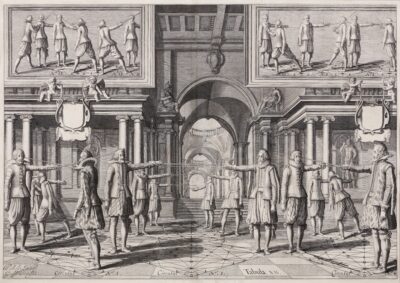
Architectural Illusion and Baroque Splendor
Dirck van Delen was a Dutch painter best known for his highly detailed and theatrical architectural paintings imagined palaces, church interiors, and ornate galleries filled with figures. Active during the Dutch Golden Age, van Delen’s works stand out for their sophisticated use of perspective, decoration, and their intricate architectural fantasies.
Early Life and Background
Van Delen was born around 1605, likely in Heusden, although he later became closely associated with the town of Arnemuiden in Zeeland, where he spent most of his life. Little is known about his early training, but he may have studied in Middelburg, a thriving artistic center at the time, and possibly under Frans Hals or Hendrick Aerts, who painted similar architectural subjects.
In 1625, van Delen became a member of the Guild of Saint Luke in Middelburg, and later served as mayor of Arnemuiden, reflecting his respected status both as an artist and civic figure.
Artistic Style and Themes
Dirck van Delen specialized in architectural capriccios imaginary architectural scenes that combined Gothic, Renaissance, and Baroque elements into richly adorned, often fantastical compositions. His paintings typically depict grand interiors or courtyards featuring:
These works were not accurate depictions of real buildings but rather imaginative exercises in form and decoration, meant to impress viewers with their opulence and spatial complexity.
Many of van Delen’s compositions also include allegorical or ceremonial scenes, such as gallery visits, fancy dress balls, or art collections, reflecting the growing interest in art collecting and intellectual life among the wealthy elite of the 17th century.
Collaborations and Influence
Van Delen frequently collaborated with figure painters, a common practice among Dutch artists. He would paint the architecture, and another artist would supply the figures. His attention to architectural detail and dramatic perspective influenced later painters of imaginary interiors and contributed to the broader popularity of perspectival illusion in Dutch and Flemish painting.
Though not as widely known today as some of his contemporaries, van Delen was admired in his lifetime for his technical precision and artistic imagination. His work blends the clarity of Dutch realism with the grandeur of Italianate and Flemish decorative styles.
Later Life and Legacy
Dirck van Delen remained active until his death in 1671 in Arnemuiden. He left behind a body of work that, while relatively small, is remarkable for its consistency of theme, refined technique, and inventive spirit.
Van Delen is remembered as a master of architectural fantasy, a painter who turned interiors into grand visions of space, splendor, and silent ceremony.
Share this:
