
Painter of Winter’s Quiet Charm
Barent Avercamp was a Dutch painter best known for his atmospheric winter landscapes, following in the artistic footsteps of his famous uncle, Hendrick Avercamp. Born in Kampen, in the province of Overijssel, in 1612, Barent became part of a family tradition of painting that focused on daily life in the Dutch Republic, particularly scenes of frozen rivers, snowy towns, and ice-skating villagers. Though somewhat overshadowed by his uncle, Barent Avercamp developed his own style and contributed significantly to the popular genre of winter landscape painting during the Dutch Golden Age.
Early Life and Training
Little is known about Barent Avercamp’s early years, but he was most likely trained by Hendrick Avercamp, who was already a well-established artist by the time Barent came of age. Hendrick, who was deaf and mute, had developed a distinctive style of painting lively winter scenes filled with figures engaged in skating, games, and daily chores. Barent inherited not only his uncle’s subject matter but also many of his compositional strategies and figure types.
Barent lived and worked primarily in Kampen, though he is also known to have traveled within the Netherlands. He likely worked in his uncle’s workshop and may have assisted or collaborated with him. After Hendrick’s death in 1634, Barent continued the family tradition, producing winter scenes that remained in demand throughout the mid-17th century.
Artistic Style and Subjects
Barent Avercamp’s paintings are closely related to those of his uncle, but art historians have noted subtle differences in tone and treatment. While Hendrick’s scenes often have a gentle humor and bustling liveliness, Barent’s works tend to be more restrained and focused on atmosphere and composition. His use of color is typically more muted, with softer grays, whites, and earth tones that evoke the quiet chill of winter.
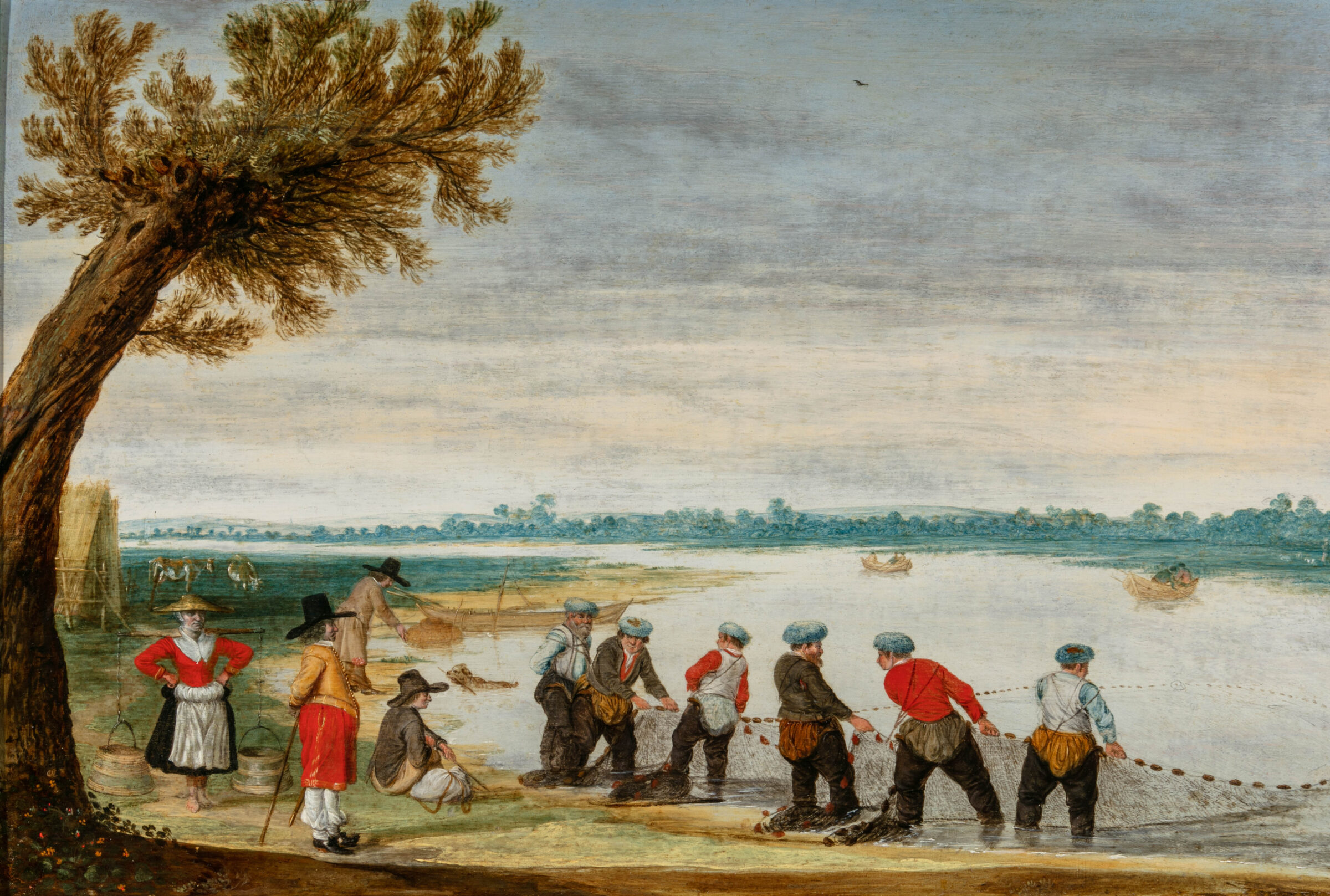
Like his uncle, Barent frequently depicted frozen rivers and canals filled with skaters, sledders, fishermen, and onlookers. The backgrounds often include snow-covered villages, church towers, windmills, and bare trees, contributing to the sense of space and depth. His attention to detail, particularly in the depiction of costume, gesture, and architectural elements, reflects the influence of Dutch realism and the careful observation of everyday life.
Some of Barent’s works also include allegorical or symbolic elements, such as references to the passage of time or the social order. However, his primary focus remained the visual poetry of winter life, presenting a world where people of all ages and classes come together on the ice.
Legacy and Recognition
Although Barent Avercamp never achieved the same level of fame as his uncle Hendrick, he was a respected and skilled painter in his own right. His winter landscapes were collected by local patrons and continued to be appreciated for their technical skill and quiet charm.
Barent’s works have often been confused with those of Hendrick, given their similar subject matter and style, but modern art historians have identified a distinct artistic voice in Barent’s paintings. He contributed to the enduring popularity of winter landscapes in Dutch art, a genre that symbolized both national identity and the changing seasons of life.
Barent Avercamp is believed to have died around 1679, though the exact date is unknown. Today, his paintings can be found in public and private collections, including the Rijksmuseum in Amsterdam and the Mauritshuis in The Hague, where they continue to offer viewers a glimpse into the serene and communal joys of 17th-century Dutch winters.
Share this: