

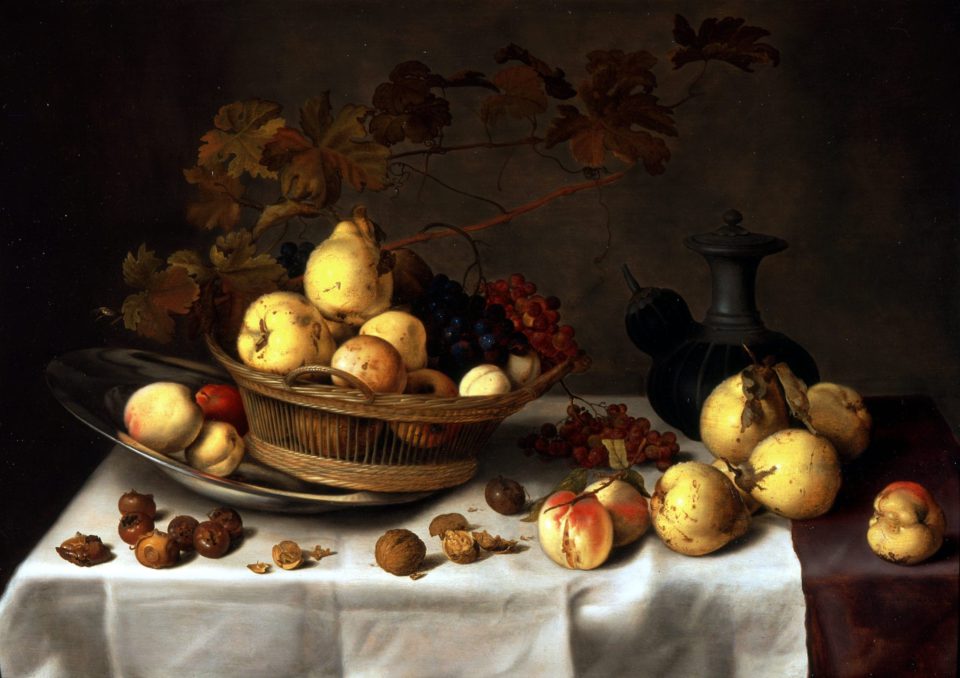
Balthasar van der Ast (1593/94 – 1657)
Master of Flowers, Shells, and Still Life
Balthasar van der Ast was a renowned Dutch still-life painter of the Dutch Golden Age, celebrated for his detailed and elegant paintings of flowers, fruit, shells, and insects. His work stands at the intersection of art and natural science, reflecting both beauty and the transience of life.
Early Life and Training
Van der Ast was born in Middelburg, in the province of Zeeland, around 1593 or 1594. After the death of his parents, he came under the care of his older sister Maria and her husband, the painter Ambrosius Bosschaert the Elder, a pioneer of floral still lifes. Van der Ast trained under Bosschaert and became deeply influenced by his meticulous style and subject matter.
In the early 1600s, the family moved to Utrecht, where van der Ast joined the Guild of Saint Luke in 1619. He later worked in Delft and Enkhuizen, eventually settling in Delft, where he lived until his death in 1657.
Artistic Style and Subjects
Van der Ast’s paintings are known for their:
- Delicate compositions of flowers and fruits in vases or baskets
- Carefully rendered sea shells, often exotic and rare
- Presence of insects, reptiles, and butterflies, adding life and symbolism
- Use of bright colors and precise naturalism
His work often carried vanitas themes, subtly reminding viewers of life’s fragility and the passage of time.
Legacy
Van der Ast’s still lifes were highly influential, and he taught several pupils, including his nephews Ambrosius Bosschaert II and Abraham Bosschaert, as well as the prominent painter Jan Davidsz. de Heem.
Balthasar van der Ast is considered one of the finest still-life painters of his time, notable for blending artistic skill with scientific curiosity and symbolic meaning.
Share this: